Hijabs in Iran

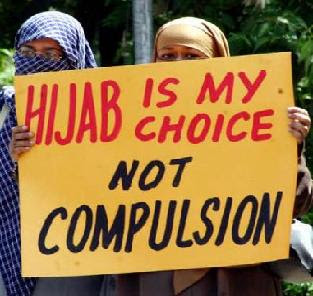
In Iran, women are required to have some sort of head cover while in public.  The law was put into effect in 1979 and states that women must cover their hair with the hijab.  Masih Alinejad describes how this law impacted families, some even crying for their daughters’ lost freedom as wearing the hijab was once a symbolic and voluntary practice.  Now days, it is very much a possibility for a women to be arrested for not complying with the law. To Alinejad, her brother lived a life that she wouldn’t not be able to have.  He was able to dress and wear what he wanted, as a boy he was not restricted by the same law she was. She envied his ability to play and run without restriction. She wanted the choice to express herself in the same way.  One day Alinejad took to the internet and asked women to share photos of themselves without their compulsory hijab. The responses were remarkable. Women replied saying that they loved what the hijab represented, but not that they were required to wear it.  Even pictures with men supporting women in their chose to cover their hair or not were sent to her. Alinejad concludes that Iran should be representative of both sides: women who want to wear a scarf and those who choose not to. Every decision should be respected and celebrated.   
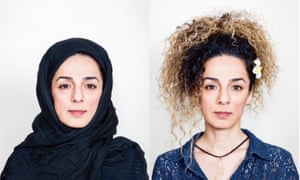
The women who shared pictures of themselves without hijabs in public, participated in a type of protest.  The collective acts of women all around the world showing their hair is called mass behavior. They are all protesting though they are not necessarily in the same place at the same time, they are united through their actions.  By taking off their hijabs in public, these women are engaging in civil disobedience in order to spark a social change. Over time the hope is for women to have choice. We would call this a progressive activism, they seek to change society.  According to pewresearch.org, throughout Muslim dominant countries, women have differing opinions about how acceptable it is to show their hair in public. In Tunisia, 56% of women say that the should be able to choose how they dress. At the same time, only 14% of women believed that they should have the freedom to choose what they wear.   To many women, the hijab is vital to preserving modesty. However, to others the hijab represents their commitment to their faith and the significance of wearing the hijab is lessened when it is required.
word count: 423

http://www.pewresearch.org/fact-tank/2014/01/08/what-is-appropriate-attire-for-women-in-muslim-countries/

The Great Migration and Sociology

The Black Belt in America’s deep south is known for its fertile soil.  This place is also were 90% of Africa Americans have lived in American history.  An enormous migration during the 1900’s saw African American leaving the south for the big norther cities.  Traditionally free descendants of slaves would stay in the south to work as sharecroppers.  But the job opportunities in the North were growing due to growing factories and the need for skilled laborers during the wars.  However, the Great Migration was not without troubles.  With so many people now trying to live in the same spaces, tensions grew leading to violence in events like the Red Summer of 1919.  But great triumphs come out of the migration.  The Harlem Renaissance is perhaps one of the most important cultural movements that America has seen, including things like literature and music.  Through out the century, there have definitive mass migrations of African Americans out of the South and each time there has been violent retaliation by the majority.  In the 1960’s, to combat this racism, activists like Martin Luther King came in to the spotlight.  It is highly unlikely that we will ever see such a migration in the future.  There is not the need to escape such persistent violence as there once was. 

To be able to put the Great Migration into sociological terms, here are some key definitions.  Rural areas are just the opposite of cities.  They are often small towns or farming country.  Urban areas are cities and are associated with large neighborhoods live known as suburbs.  The Great Migration resulted in urbanization, millions of people moved from the rural (small) towns to massive cities.  A mass influx of people like this cause the urban density to increase, meaning there are more people living in the same general area and giving each inhabitant, quite literally, less space to live.  We measure how dense an area is by the number of people per square mile.  According to the Encyclopedia of Chicago, Chicago was the destination for nearly 500,000.  The African American population there increased from 2% to 33% by the 1970’s.  As a result of the new population size, the suburban areas started to grow, called suburbanization.  However, it is important to note that in the 1900’s the movement of white communities out of the city and into the suburbs was because of racist ideas and prejudices held against African Americans.  We call this trend of white people leaving white flight. 

word count: 415

http://www.encyclopedia.chicagohistory.org/pages/545.html

Media and Monopoly

During the 1980s, 50 companies owned 90% of the media.  In 1992, that number shrunk to under 24 and in the present day there are just 6 companies.  These six companies produce television, streaming services, and other similar products.  Comcast is the largest of these conglomerates.  They provide cable to more people than any other company in the word as well as provide internet for half of the population of America.  Disney is the second largest conglomerate.   They focus on original content, theme parks in addition to owning many big-name television networks.  Twenty first Century Fox is the third largest, focusing mostly on movies and news shows.  Time Warner is the next in line.  This company was once that largest media company in the world.  However, they lost billions after attempting to merge with America Online.  After the failed merger, the company was forced to split in two: Time Warner and Time Warner Cable.  Despite this the two companies still take up spots four and five on the list.  CBC and Viacom went through a similar separation, yet they still come in to spots six and seven on the list.  The number of companies on this short list can get confusing especially since half of them were once connected.

As all of this information can be overwhelming, let’s break it down.  First, a conglomeration is one company that owns or is in multiple unrelated businesses.  A merger is the action of two companies becoming one through legal means.  Secondly, the limited number of companies offering the same services results in a high concentration.  However, these companies do not depict a monopoly since there are multiple companies in control of the media instead of just one.  To be a true monopoly, there can only be one ownership of the service.  Monopolies are prevented with antitrust laws.  These laws breakup “monopolies, [prevent] price fixing, or other forms of collusion”.  Now why is having six large companies better that having just one in charge of the media?  We may complain about the prices we have to pay for the TV and streaming services, but because there are six companies, there are six competitors.  If one company had a monopoly, they could drive prices up and wouldn’t have to worry about the quality of their content and service.  Then we would really complain.  One famous example of a near monopoly in America is Standard Oils.  John D. Rockefeller’s company was in control of up to 91% of oil production in the United States until the company was found in violation of the anti-trust laws subsequently broken up. 

word count: 433

https://www.therichest.com/business/companies-business/six-enormous-monopolies-past-and-present/

The Real World: An Introduction to Sociology

Authoritarianism

Venezuela was once the richest country in South America. Under the leadership of Hugo Chavez, the country had ample funding thanks to the boom in oil (the country sits on a huge oil reserve).  Venezuela thrived and Chevez’ approval ratings went up.  However, he was careless with the spending which intern lead the country to a deficit.  When Nicolás Maduro was elected into office in 2013, the oil industry saw hard times, but he did not make any changes to how the country was run.  Subsequently, the country became poor as Maduro manipulated the people and the government to remain in power and make money.  In 2015, Maduro stacked the Supreme Court in order to take away power from the National Assembly.  He essentially had made is own government by then filling the National Assembly with those loyal to his agenda.  Later in 2017, a presidential election was held.  However, any opposition was removed and some people were even forced to vote for him in order to have a voter turnout.  Currently, 80% of Venezuelans want Maduro out of office.  Maduro has continued to gain power despite the people’s opposition.  Currently, Venezuela has the highest inflation rate in the world.  The Gross Domestic Product is just a fraction of what it used to be.  As the video points out, the GDP is below that of the United States during the Great Depression.  Naturally with the extreme poverty and desperate situation, the crime and murder rates are through the roof. 

Maduro started out his presidency with authority, meaning he had “the legitimate right to wield power”.  By being elected, power, “the ability to impose [his] will”, was given to him by the people.  However, he lost true authority when he manipulated the government in order to gain more power.  The say of the people was taken away.  This type of government is called authoritarian or authoritarianism.  Of course, there were still elections held in the spirit of the democracy (as we all know a government that allows the people to vote) in which their constitution was constructed.  But because the elections were coercive and had no alternative politician to vote for, the government is authoritarian masquerading as a democracy.  The people were essentially disenfranchised, their right to vote freely was taken away.  As mentioned above, Maduro keeps only those who support him in office.  These few people control everything about Venezuela, for example, the military has control over the food distribution.  Since the collapse of the economy and the discovery of government corruption, the well being of Venezuelans and the country as a whole as plummeted.  Here are some important things to know:

-90% of the country is below the poverty line

-73 people die each day due to violent crimes

-3 million residents have left

-inflation is expected to reach 10,000,000% (some perspective, in 2009, 1 VEF =.465 USD,   now 248,488.00 VEF= 1USD and increasing!)

word count: 488

https://www.x-rates.com/average/?from=VEF&to=USD&amount=1&year=2009

https://www.mercycorps.org/articles/venezuela-crisis-quick-facts

http://www.worldforexrates.com/usd/vef/1-exchange-rate/

The Real World: An Introduction to Sociology page 289-290

Women in Congress

Congress has seen more women, especially women of color, elected in this recent Congress elections.  Before these midterms, less than 1%of Congress identified as LGBT and only 7% were women of color.  Now, of course, all women have more representation relative to their population size, but there is still a disparity between the representation and what would be proportionate to various groups of women.  Vox goes into the details about the benefits that these women bring to Congress.  They more openly talk about certain topics such as education and the minimum wage in addition to bringing in 9% more federal spending.  Not to mention that they sponsor more bills than their male counterparts.  Yet we don’t see a proportionate number of women in Congress because many women feel they do not have what it takes to be in Congress.  They may even believe that people won’t vote for them based on that mentality or because of their gender.  However, as we see more women in office, more women believe that they too could be in office and have an impact on their communities. 

So why has this happened?  From a young age many girls are taught to act a certain way, different from boys.  This is called gender role socialization, all our lives we learn what it means to be a girl or feminine, usually to be polite, be mild-mannered, wear clothes that are flatter our bodies, etc.  The same is true for boys, but they are told to be tough and driven.  This coincides with social learning, how our actions and behaviors come across to others and how that plays a part in our society.  So, when girls reach adult hood and they are starting a life for themselves, finding their place may be difficult.  The tools they were given in child hood (essentially to not rock the boat) are not the ones required to enter a male dominated field.  We see this in Congress.  Our Congress may be the most iconic thing of our patriarchal society, were men have the most power in a certain society.  We most likely all have an idea of what the people in our Congress have looked like… it’s not too diverse looking.  But as more women give inspiration to others to run for office, it is starting to look how America looks.  This trend of women in government falls into the larger movement of third wave feminism.  These women (and many others) are promoting the idea that any identity any one may have deserves equality and representation. 

This is where the diversity of Congress stands according to senate.gov. Out of 435 members…

-115 are women

-21 women identify as African American

-10 women identify as Hispanic/Latina-46 in all (a record number)

-11 women identify as Asian/Pacific Islander

As a whole, 116 members identify as a person of color (there may be some overlap as some members identified with more than one ethnicity). That combined with 115 women is 231, our most diverse Congress yet.

word count: 499

https://www.senate.gov/CRSpubs/b8f6293e-c235-40fd-b895-6474d0f8e809.pdf

Race in Politics

Vox’s video describes how race plays a role in our politics.  In 2013, there were more non-white babies born than white babies.  Many people believe that the growth of non-white populations in America is changing how we view America.  In the state of California, the matter proved to be divisive, causing an 11% increase in support to support the Republican party.  Interestingly, this trend was seen throughout races.  When Obama became the first black president, the thought was that America would finally be able to see past race.  However, we know the opposite to be true.  His skin color became even more important somehow, both to the critics and to the supporters.  More recently Trump was elected president.  Where we had some sense of celebrating different races, it now took center stage for Trump’s and other Republican politicians’ campaigns.  Non-white communities were/are said to be dangerous and action needs to be taken to protect, as Trump says, Christian values. At the same time, Democrats advocate for acceptance of all people.  The video concludes by saying that as the populations of minorities grow so may the majority’s fear of losing their social standing.  This in turn could lead a rise in the conservative politics as we see now. 

Sometimes in America we refer to all Latinos ad Mexicans. This photo shows that not all people from Latin America are Mexican.

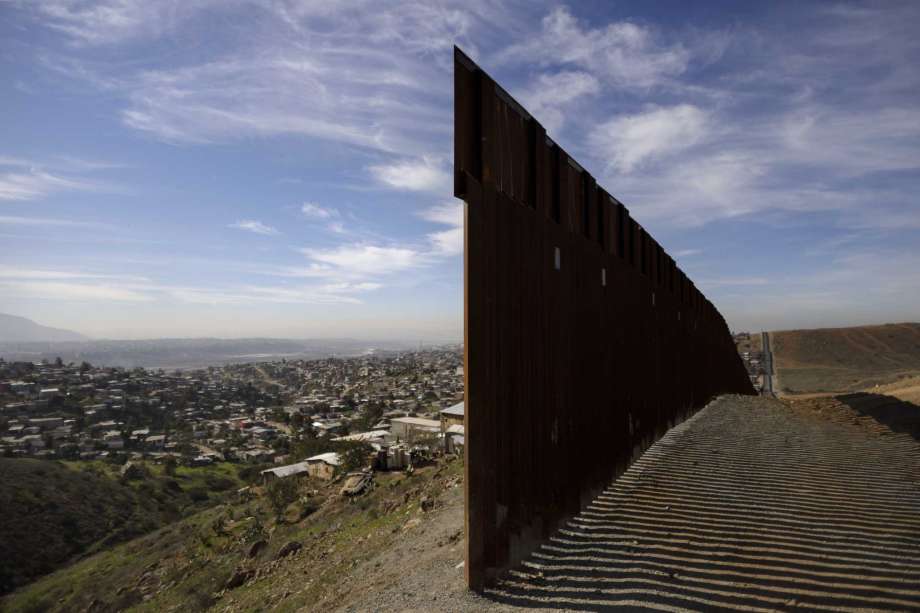
At first glance, it seems that white populations in America are simply concerned about loosing their majority status in society.  Part of the concern may even be the fear of the unknown, they know how society is and has been and for them its comfortable.  Out of fear, they turn to other people with power to protect them i.e. Californians voting conservatively and on measures against the interest of the minority.  Further, when we hear negative things that are not necessarily true about certain minority groups, it solidifies those actions.  While these prejudices are not founded in fact, they are believed, especially when an authority figure repeats them.  If left unchecked, prejudices evolve into discrimination, were we don’t allow those deemed inferior to enjoy fair treatment.  An example of prejudice in our current politics is the sentiments towards Mexicans.  The is a prejudice that Mexicans are taking our health care, our jobs, robbing, killing, overall bad people.  As such, many believe they should not be let in the country.  In this situation, Latinos (not those just from Mexico) are facing discrimination both individual and institutional.  Individual discrimination would occur should someone refuse a Latino service, wants them to leave a public facility, or any other act that might prevent their equal treatment.  An example of institutional discrimination is the prevention of Latinos from entering the country.  They are not being allowed the same access that a white European would have if they were to move to the country. Though it may seem today that many people feel this way and want to prevent entry with a wall, the Washington Post found that there is a decline in how many people support a border wall. While the Vox video does not address specific issues like this, it is important to know how race affects our politics.

word count: 512

https://www.washingtonpost.com/news/posteverything/wp/2018/06/27/what-do-americans-think-about-the-wall-the-answers-may-surprise-you-only-if-you-read-drudge/?utm_term=.7bf26bc62339

American Middle Class

This video by ABC explores American families in the middle class.  Many Americans classify themselves to be in the middle class. We think they would be living comfortably but in reality, they are barely living pay check to paycheck, having to pick up an additional job or two just to make ends meet.  One man, Chris, works three jobs in varying fire departments.  He and his wife are barely able to pay bills and student loans back even after pinching pennies and making due with the things they already have.  By the time everything is all said and done, they have no money to put into savings, not to mention precious time to spend with their families.  In another family, mom Tracey makes $22,560 per year.  In one month, she will make $1,880; $800 pays the mortgage, $200 the gas and electric, $200 for the car, add in groceries, clothing for kids, and incidentals what’s left is minimal.  If she takes her kids out for a MacDonald’s treat once a month, her remaining $50 will turn into pocket change.  Even families that are making six figures per year in California cannot afford to live in a traditional middle-class neighborhood.  The cost of living has gone up, but salaries have not.  No matter where in the country people live everyday expenses continue to be out of reach.   

Most of the middle-class families are white collar workers meaning they work in managerial positions or they work as train technical laborers.  These are just the “average Joe” who usually have completed some form of higher education.  In recent years this middle class is getting smaller and smaller, either moving up to the upper-class or dropping down to the working-class.  The Washington Post found the typical range for the middle-class to be making from $45,200 to $135,600 each year which may more or less appear reasonable.  However, the average of $78,000 income has not budged since the year 2000 (Washington Post).  Considering the decline of people in the middle-class with the rise in the cost of living and the stagnant income, a status inconsistency as developed.  A status inconsistency occurs when a person’s perceived position in society does not line up with their “wealth, power, or prestige” (“The Real World”). We believe the average Joe to be financially stable with a respectable job.  In reality, our average Joe lives what we would expect the working class to to live like, he does not have the wealth that we would expect him to have.  The working class typically works a blue-collar job like waitress-ing, retail, or manual labor making $40,000 in a year.  Further, we have this idea of social reproduction.  If our parents were middle-class then so will we and so will our children.  That again is not the reality.  Like the ABC video points out, the previous generation was financially stable; their kids (like Chris and Tracey) are struggling to stay afloat. 

word count: 478

references:

https://www.cbsnews.com/news/americas-middle-class-losing-ground-to-the-rich-and-poor/

“The Real World: An Introduction to Sociology” by: Kerry Ferris and Jill Stein

Tattoos in Timor

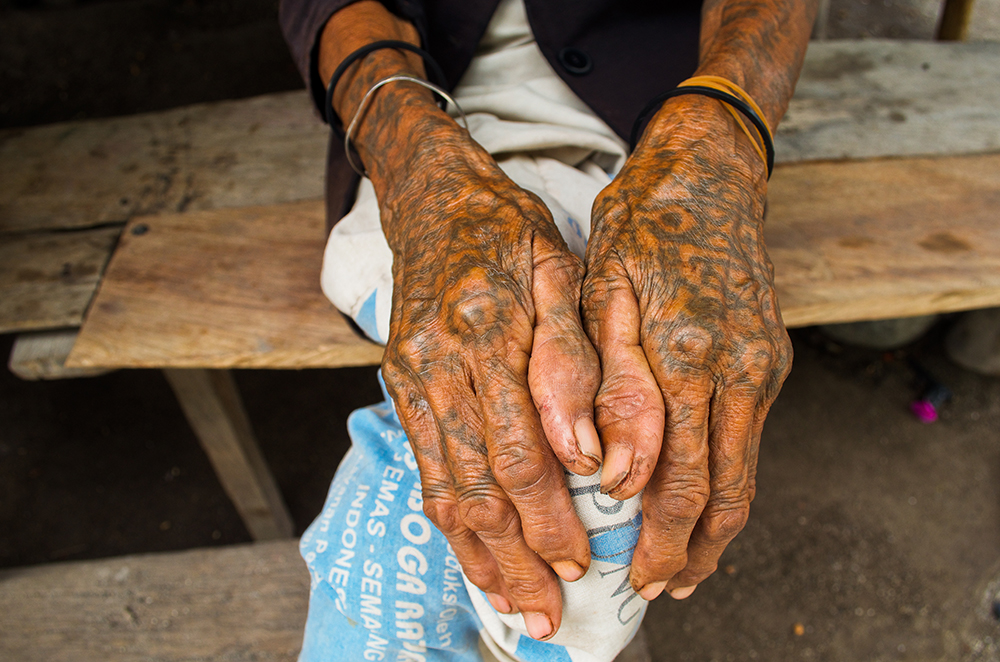
This video made by Broadly explores the traditional martial tattoos of women on the Pacific island of Timor in the village of Malaka and how those tattoos came to help them in World War II.  Since most of the women were born in the 1930’s they experienced first-hand WWII and an invasion by the Japanese military.  These women, for days on end, tattooed their arms and legs in order to appear as though they had a husband.  This way when the Japanese came, they would not kidnap the women and turn them into sex slaves.  Even though the women were not married, they knew it was the only way the Japanese forces would leave them be.  For many years after the tradition of tattooing the body to represent marriage continued. But in more recent times the younger generations of women are not getting tattoos for any purpose.  They do not see the need to mutilate their bodies in such a way.  There is no threat of invasion or kidnapping and they do not see the need to be tattooed to represent their marriage. 

The use of their tattoos in this way gave them social power over the Japanese invaders.  Though it was not an outright display of power in physical way we would normally think, they were able to control the actions of others.  Meanwhile, the Japanese employed coercive power, threatening physical harm, in their attempts in kidnapping the women.  The tattoos and the war together created group cohesion among the women.  To this day they all feel they belong to this group within society.  Every aspect of these women’s lives adds to this cohesiveness from the tattoos and their backstory to the way they act and their overall status in society.  It is interesting to listen to the women speak.  They throw around slang and have taken on a tough persona (though they would use another word for it).  Their matriarchal society of course makes them the leaders only keeping the women close knit.  As mentioned earlier, the younger generations of women deviated from the norm of being tattooed for marriage, they chose to go against what their society prescribed as acceptable.  At the same time the older women deviated from the new norm.  Of course, this is not something they could have controlled, after all they had been tattooed before the shift of the norm.  It is interesting to compare tattoos in this society in comparison to the United States.  Four out of ten Americans have at least one tattoo and it seems as though tattoos are becoming less of a deviant behavior (statista.com).  Meanwhile, in Timor tattoos aren’t necessarily considered deviant behavior, but they are far less common than they once were.  It wouldn’t be surprising if tattoos eventually were considered deviant behavior in the future. 

word count: 469

https://www.statista.com/chart/9980/us-adults-with-a-tattoo/

Cultural Diffusion in Kuwait

In the United States, we are used to seeing fast food places everywhere.  Some cities may even have a road lined with all the different restaurants.  Even one small town may see multiple of the same specific restaurant.  We may think this a uniquely American feature, but every year more fast food companies are opening more chains all over the world.  The Vice video explores this, specifically how American fast food is leading to health problems in Kuwait. Every restaurant can be found there from MacDonald’s and Hardee’s to Pizza Hut and KFC.  There it is not uncommon for a person to eat out as little as four times a week or up to three times per day.  This is in part due to the accessibility and low price of the food in addition to being places for socialization.  Families and friends spend a significant amount of time in American fast food chains as the country of Kuwait does not allow alcohol and thus there are no bars to go to.  While the over all health of the country is alarming, there is another phenomenon happening.  American companies are expanding to numerous countries, Kuwait is just one example and could have been almost any other country. 

This trend is known as cultural diffusion, the American way of getting a quick dinner from MacDonald’s is becoming a part of life outside of America to other groups of people.  While cultural diffusion is not immediately bad, it can lead to certain issues like that of health as seen in Kuwait.  If enough aspects of one culture are spread, it becomes known as cultural leveling.  This is a gradual process where cultures become increasingly similar.  Cultural leveling can be alarming and some countries try to protect themselves from undesired influences.  For instance, China doesn’t allow access to Facebook and other American websites believing them to be “endangering national security” (cpj.org).  An extreme example of course is North Korea, which allows virtually no outside influences.  With cultural leveling we lose the richness of cultures and traditions as western (American) products are (in a certain light) being imposed on other countries.  We see this as Kuwaitis eat fast food instead of making regional dishes.  For a while some countries may be able to bar western influences like American fast food.  However, it may prove impossible as the world becomes smaller due to technology.  As American companies continue to expand and influence other cultures, cultural imperialism comes closer into view.  Cultural imperialism is the cultural “invasion” of different culture.  This concept goes beyond just fast food chains, it is large scale, from celebrities and entertainment to clothing and products.  Though this may seem daunting, it’s important to keep an optimistic perspective.  Culture and tradition mean a lot to us.  Individual cultures won’t be easily let go because they lend themselves as an identity.  

word count: 476

List of countries than use censorship/restrict and why:

https://cpj.org/2015/04/10-most-censored-countries.phph

Copwatch in Ferguson

Immediately after the death of Michael Brown at the hands of police officers in Ferguson, Missouri, his neighbor, David Whitt, took action to prevent another such death from happening again.  He began Copwatch, taking inspiration from the Copwatch group in Oakland, California.  Armed with cameras, the organizations aim to prevent police brutality by capturing wrongdoings on camera.  People like Whitt only want to protect the rights of those in their communities.  Copwatchers do not seek to intervene or try to prove innocence of suspects, they are only there to film unnecessary force used by police officers.  These people train themselves to peacefully and efficiently film video from police interactions.  It seems as though these efforts are slowly bringing to light how ready police are to give out tickets or jail people for small offenses, specifically in Ferguson.  In the traffic stop Whitt features in the video, a black woman is pulled over for having expired plates, but is left with eight tickets, totaling well over $800.  In cases where excessive force is exhibited, Copwatchers will offer the footage collected in case it could be of help to someone who had an interaction with the police weather they are guilty or not.

                Organizations like these are essential to invoking change.  Filming police in this manner is the very definition of praxis; a community sees a problem and it is taking steps to make it better.  The video shows all types members of the community participating in copwatching.  They are all filming because they know it can help someone else and others in the future.  Besides police violence, the point of the Vice video really comes down to racial profiling.  Communities like Ferguson and Oakland are predominantly African American, and it’s from communities like these that we hear of police violence.  According to policeviolencereport.org, 2017 saw 1,147 police killings of which 68% were “unarmed and not attacking” people of color compared to the 32% that were “unarmed and not attacking” whites.  Even on the smaller scale, this type of social inequality is reflected.  According to the Vice video, 75% of the people living in Ferguson, Missouri have a warrant, most for minor infractions.  Many may have to pay additional fines which they may not be able to afford.  It is a great disservice to communities, like Ferguson, that the police have to be filmed out of fear by the public.  These are people that are meant to protect and not be the people to be protected from.  Copwatchers are helping to change the view that a lot of society holds on to, that police brutality is acceptable. Excessive forced used by police will not be tolerated.   

word count: 443

https://policeviolencereport.org/